


The history of Cannes beaches
La pointe Croisette
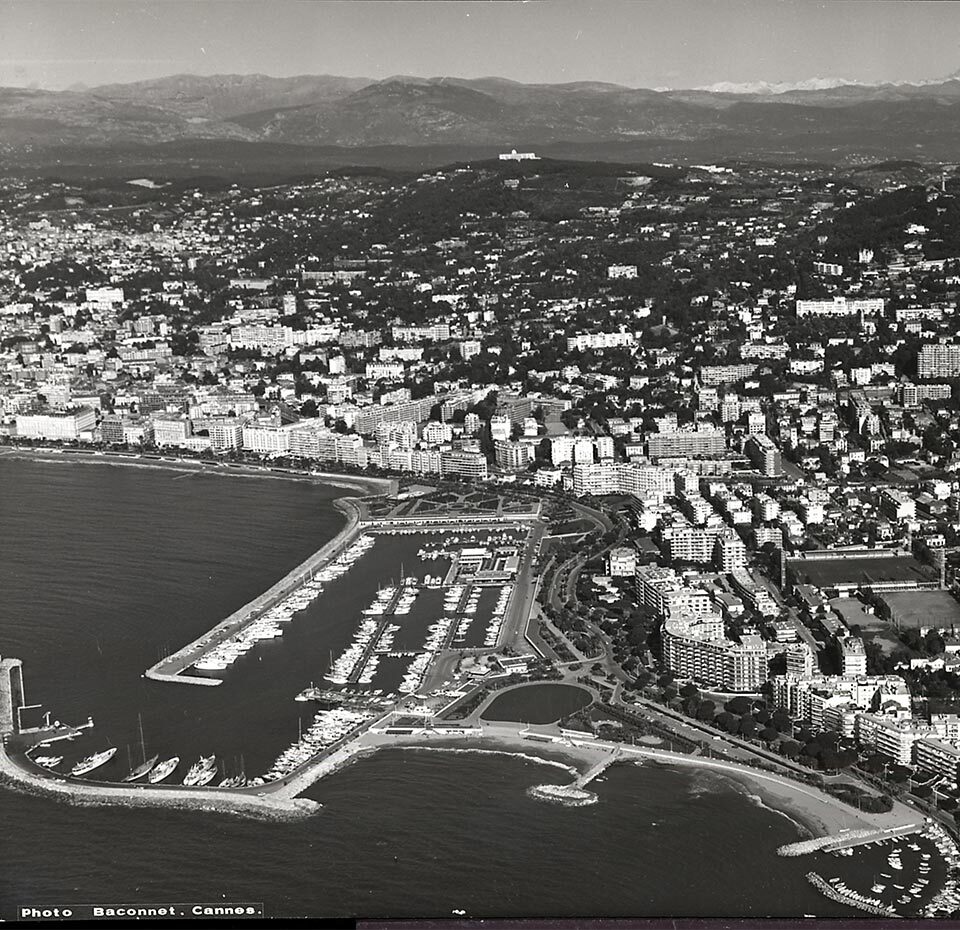
Pointe Croisette, which included Palm Beach and Port Canto around 1970, grew steadily. Initially preserved because of its relative insalubrity, it became a place reserved for fishing, then a resort destination. Most of the large and small villas have been replaced by residential buildings, multiplying the number of constructions while preserving the idyllic setting.
The construction of the second harbor in the 60s was a major development, considerably modifying this part of the Croisette, which is now also dedicated to pleasure boating. For more details on the history of Port Canto, please consult the boxed set on the History of public spaces in the Pointe Croisette district.
Beautiful, carefully tended gardens add to the charm of this stretch of coastline. The Royal Fort on Sainte-Marguerite Island, a historic monument in the bay, is particularly impressive at sunset, from Mourre Rouge and Palm Beach.
Cannes beaches on the Croisette
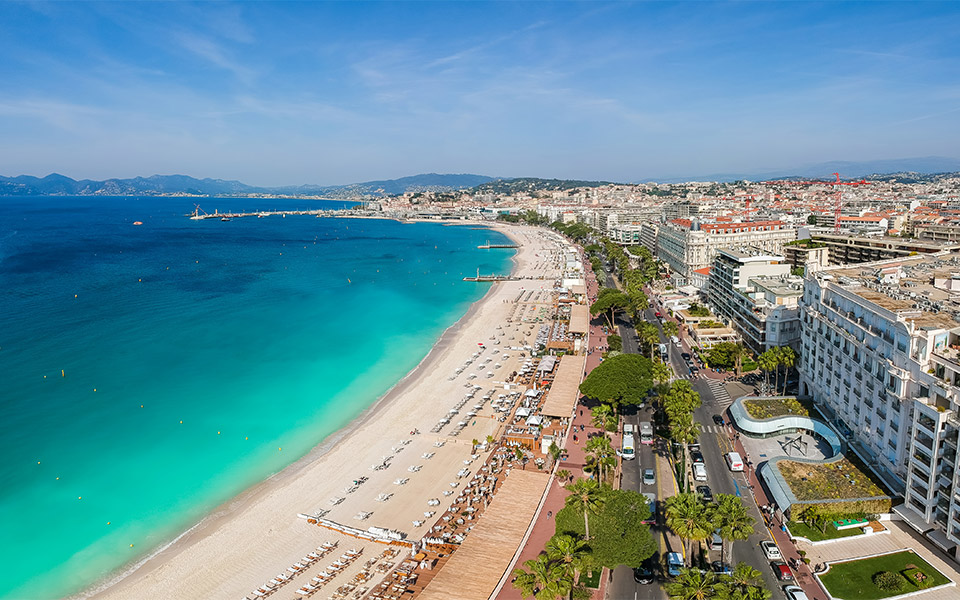
Cannes’ beaches on the Croisette have a rich and fascinating history. Originally, in the 19th century, Cannes was a small fishing town, and the beaches were unspoilt natural areas. With the arrival of luxury tourism in the 1860s, the first seaside resorts were built, transforming the Croisette into a popular destination for Europe’s elite. Wooden bathing cabins were installed for bathers, and the first elegant villas began to line the coastline.
Over the years, these beaches have evolved into iconic landmarks, synonymous with glamour and relaxation. Today, the Croisette is lined with private beaches, each offering exclusive services and unique experiences, while retaining the charm and elegance for which Cannes is renowned. These beaches continue to attract visitors from all over the world, eager to enjoy the natural beauty and sophisticated ambience of the Croisette.
From sea bathing to the beaches of the Croisette
In the 1860s, sea bathing became popular. In 1863, Cannes installed public cabins near the
the present-day Majestic Hotel for bathers. Newspapers extol the benefits of saltwater cures.
The June 9, 1865 issue of the Revue de Cannes described the charming bathing cabins, equipped with all the necessities and bathing masters for the safety of families.
In 1877, Le Courrier de Cannes listed three bathing establishments on the Croisette, including Joseph Bottin’s near the Cercle Nautique. Elegants enjoyed drinks while watching the bathers. Some swam unaided, while others, more timid, clung to the rope.
The plants were modernized until the Second World War. In June 1940, Italian aircraft bombed Cannes, and the French authorities demolished the seaside resorts to build the Mediterranean Wall, a defensive barrier to prevent any landings.